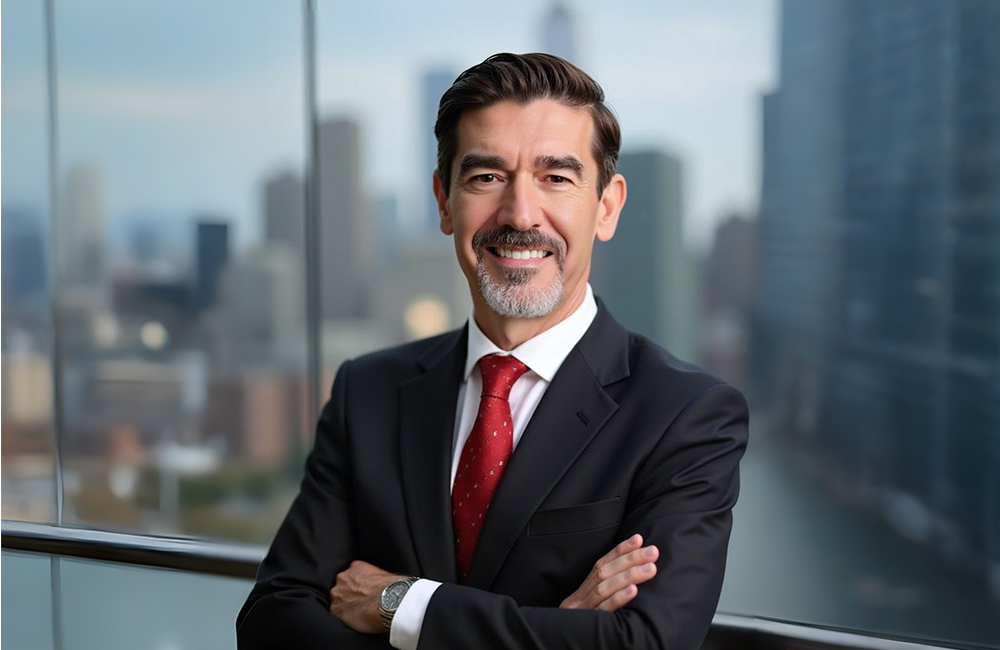
Check Point’s vice president (EEMA), Diego Arrabal, says organisations across the Middle East must rethink security strategies and strengthen collaboration as AI accelerates cyberattacks.
In an exclusive interview with Techpulse Media at Check Point Engage 2026 in Dubai, Diego Arrabal, Vice President for Eastern Europe, the Middle East and Africa (EEMA) at Check Point Software Technologies, discussed how artificial intelligence is reshaping the cybersecurity landscape, accelerating cyberattacks and forcing organisations across the region to rethink their security strategies. He also emphasised why stronger collaboration between businesses, governments and technology providers will be essential to building cyber resilience.
The time between the discovery of a software vulnerability and its exploitation by cybercriminals has contracted from months to minutes, according to Diego. For businesses investing heavily in artificial intelligence, that acceleration is changing the demands placed on cybersecurity teams.
“The old way of dealing with this is not valid anymore” Arrabal told Techpulse. “You need to put in place some AI tools as a defence to make sure that you can answer at the speed of the attackers.”
Arrabal’s assessment comes as organisations across the region accelerate their adoption of AI, introducing new capabilities into their operations while expanding the systems, data and infrastructure that must be protected. The same technology helping businesses work faster is also giving attackers new ways to develop more sophisticated and varied methods of intrusion.
For Arrabal, the central question is no longer simply whether organisations have invested in cybersecurity technology. It is whether their defences can keep pace with a threat landscape that is changing faster than traditional security strategies were designed to accommodate.
AI is changing the pace of attacks
The Middle East’s rapid embrace of AI presents a particular challenge. Arrabal pointed to the UAE’s adoption of the technology as an example of how quickly the region is changing, noting figures presented during the event that put the country’s AI use among the highest globally.
But widespread adoption also creates a larger potential attack surface. As businesses integrate AI into more processes, security teams must contend with emerging threats alongside the vulnerabilities already present in their networks and applications.
Diego Arrabal believes the most significant change is not simply that attacks are becoming more sophisticated, but that they can be developed and deployed at greater speed.
“Probably the main change will be the variety of attacks because you can produce attacks in a much more sophisticated way, but also the speed” he said.
The shortening interval between vulnerability disclosure and exploitation leaves security teams with less time to assess risks, prioritise patches and respond to emerging threats. For organisations relying on established procedures and manual intervention, the pressure is considerable.
That makes AI-assisted defence increasingly important, Arrabal argued. Security systems must be able to identify and respond to threats at a pace that matches the capabilities of attackers, rather than depending entirely on processes built for a slower-moving environment.
Why technology alone is not enough
Diego Arrabal was careful not to present technology as a complete answer to the problem.
As a technology provider, Check Point develops security solutions designed to protect organisations against evolving threats. But Arrabal argued that the effectiveness of those tools depends in part on the wider relationships through which security decisions are made and implemented.
“Technology alone doesn’t go a long way” he said.
He identified collaboration between chief information security officers (CISOs), corporate boards, governments, technology providers and industry partners as essential to building stronger defences. Security leaders, he suggested, cannot be expected to manage the growing complexity of cyber threats in isolation.
The argument is particularly relevant in a region where digital transformation and AI adoption are advancing rapidly. Organisations may have access to sophisticated security products, but their ability to respond effectively also depends on whether they have the right expertise, partnerships and institutional support.
Arrabal said Check Point’s approach involves bringing together cybersecurity practitioners, CISOs and partners from the Middle East, Africa and Eastern Europe, alongside providing the technology needed to protect organisations.
He described genuine collaboration as a central element of regional cyber resilience, rather than an addition to an otherwise technology-led strategy.
The distinction matters because security responsibilities increasingly extend beyond individual IT departments. Boards must understand the risks facing their organisations, while security teams need the authority, resources and external support to respond. Governments and industry partners also have roles in strengthening the wider environment in which businesses operate.
The questions security leaders should be asking
For business leaders attending Engage Dubai, Arrabal’s advice was to reassess whether their existing security strategies remain fit for purpose.
One question, he said, should be whether an organisation’s current approach was designed to protect the business as it operates today or the organisation it was a year or two ago.
That distinction becomes increasingly important as companies introduce new AI applications, expand their digital infrastructure and change the way employees and customers interact with their systems.
A second question concerns collaboration: who does the organisation need to work with to strengthen its security posture?
Arrabal pointed to exposure management, which helps organisations identify and prioritise security weaknesses, as one area where technology providers can contribute. But he cautioned that even effective tools cannot deliver their full value without cooperation between the people and institutions responsible for security.
His comments also underline a broader management challenge. Cybersecurity is no longer simply a technical function tasked with preventing incidents. It requires an ongoing assessment of business risk, investment priorities and the organisation’s capacity to adapt.
For CISOs, that means regularly challenging established assumptions rather than treating a previously successful security strategy as a guarantee of future protection.
An uncertain future for AI security
When asked what the region’s cybersecurity landscape might look like over the next three to five years, Arrabal resisted the temptation to offer a confident forecast.
“I think that nobody knows currently what the security panorama will be in three to five years” he said.
The rapid speed of change makes detailed predictions difficult, he argued, even over a much shorter horizon. Although he expects attacks to become more sophisticated, he said it would be unrealistic to claim certainty about the precise threats organisations will face several years from now.
Instead, Check Point is working on autonomous security systems designed to learn from attacks and improve their effectiveness as threats evolve, Arrabal said. He also emphasised prevention as a fundamental principle of cybersecurity.
The approach reflects a shift away from relying exclusively on predictions about what attackers might do next towards building systems that can adapt as new threats emerge.
For businesses across the Middle East, the implications extend beyond the choice of security software. As AI becomes more deeply embedded in commercial operations, resilience will depend on the ability to adapt defences, revisit assumptions and work across organisational boundaries.
Arrabal’s message to security leaders was therefore less about predicting the next wave of attacks than preparing for a future in which the nature of those attacks may be difficult to anticipate.
In an environment where the window for responding to vulnerabilities is narrowing, the organisations best positioned to protect themselves may be those that combine faster technology with stronger leadership and closer collaboration.
TechPulse Media interviewed Diego Arrabal at Check Point Engage 2026, the cybersecurity company’s two-day Dubai gathering bringing together executives, security practitioners and industry specialists to discuss the challenges of securing AI-driven businesses.