ServiceNow (NYSE: NOW), the AI control tower for business reinvention, today released UAE-specific findings from its Enterprise AI Maturity Index, exposing a critical disconnect between organisations’ AI spend and execution. Despite a 105% year-on-year increase in AI spending, UAE organisations achieved an AI maturity score of 48 out of 100. While this marks a 13-point year-on-year increase, it highlights the shortcomings that must be addressed as UAE organisations move from early experimentation toward more advanced execution.
The findings suggest the gap is not due to a lack of investment. Alongside the sharp increase in spending, UAE organisations expect AI to account for almost one-fifth of total IT budgets by 2027. Instead, the research shows many organisations are still trying to layer AI onto fragmented technology environments, disconnected data and siloed workflows. While organisations have made noteworthy progress in AI vision, strategy and leadership, execution remains constrained by lower maturity in AI-enabled workflows and talent development, limiting their ability to scale AI across the enterprise.
While agentic AI has emerged as one of the region’s defining technology trends this year, the report suggests that, in reality, organisations are approaching autonomous AI deployment cautiously as they work to establish the governance, trust and operational foundations needed to scale it safely. Currently, more than half (57%) of UAE organisations have implemented agentic AI, but only 7% have used it to build autonomous workflows. In most organisations, AI is still helping employees work more efficiently rather than transforming how the business operates.
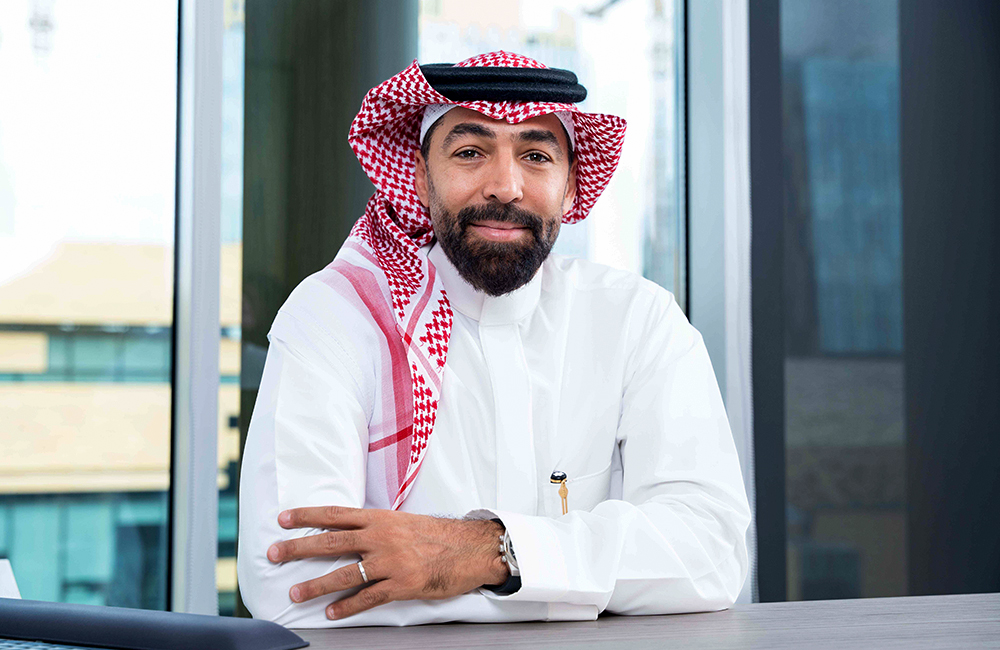
“The UAE remains one of the world’s most ambitious AI markets. The government’s long-term strategy and regulatory leadership have given organisations a genuine head start,” said Saif Mashat, VP – Middle East & Africa at ServiceNow. “While UAE organisations have built the financial and strategic commitment to AI, the ones pulling ahead are moving from AI pilots to AI orchestration, connecting legacy systems, data, governance, and AI agents in one control tower. That’s where enterprise-wide execution begins.”
Beyond the shift from agentic augmentation to true business transformation, the report identifies three further foundational challenges UAE organisations must address to regain their AI maturity edge. Legacy technology remains a significant constraint, with just 14% of organisations having replaced legacy systems with integrated platforms. As a result, AI is often deployed across fragmented, siloed workflows rather than a unified operational backbone. Data readiness also continues to hold organisations back. More than three-quarters (77%) of UAE executives cite inadequate data accuracy, access and management as a major barrier to AI adoption. This reinforces the importance of modernising data management and integration as organisations scale AI across the enterprise.
Finally, the report shows that organisations with the highest levels of AI maturity take a broader approach to AI transformation, than simply investing in new technologies. They are significantly more likely to establish a shared AI strategy, modernise and integrate their data, deploy autonomous AI workflows, invest in continuous workforce upskilling, and embed trust and transparency into AI governance. As a result, these businesses achieve an average AI return on investment of 160%, rising to a projected 194% within two years. They are also 5.6 times more productive, 2.7 times more successful at scaling AI and 2.6 times more effective at managing risk. In the UAE, however, only 16% of organisations have implemented AI testing, auditing and risk management processes, highlighting a significant opportunity to strengthen the governance foundations needed for AI at scale.
“The organisations pulling ahead are no longer distinguished by how much they spend on AI, but by how effectively they operationalise it. This requires moving from point solutions to unified, orchestrated platforms,” said Mashat. “Strong governance, connected data and orchestrated workflows are what translate investment into business outcomes. Together, these give organisations the confidence to scale AI, manage risk and generate measurable returns. The UAE government has already created many of the conditions for AI leadership. The challenge for enterprises now is to bring that same discipline and consistency into their own organisations.”